
How to Plan Living Room Lighting
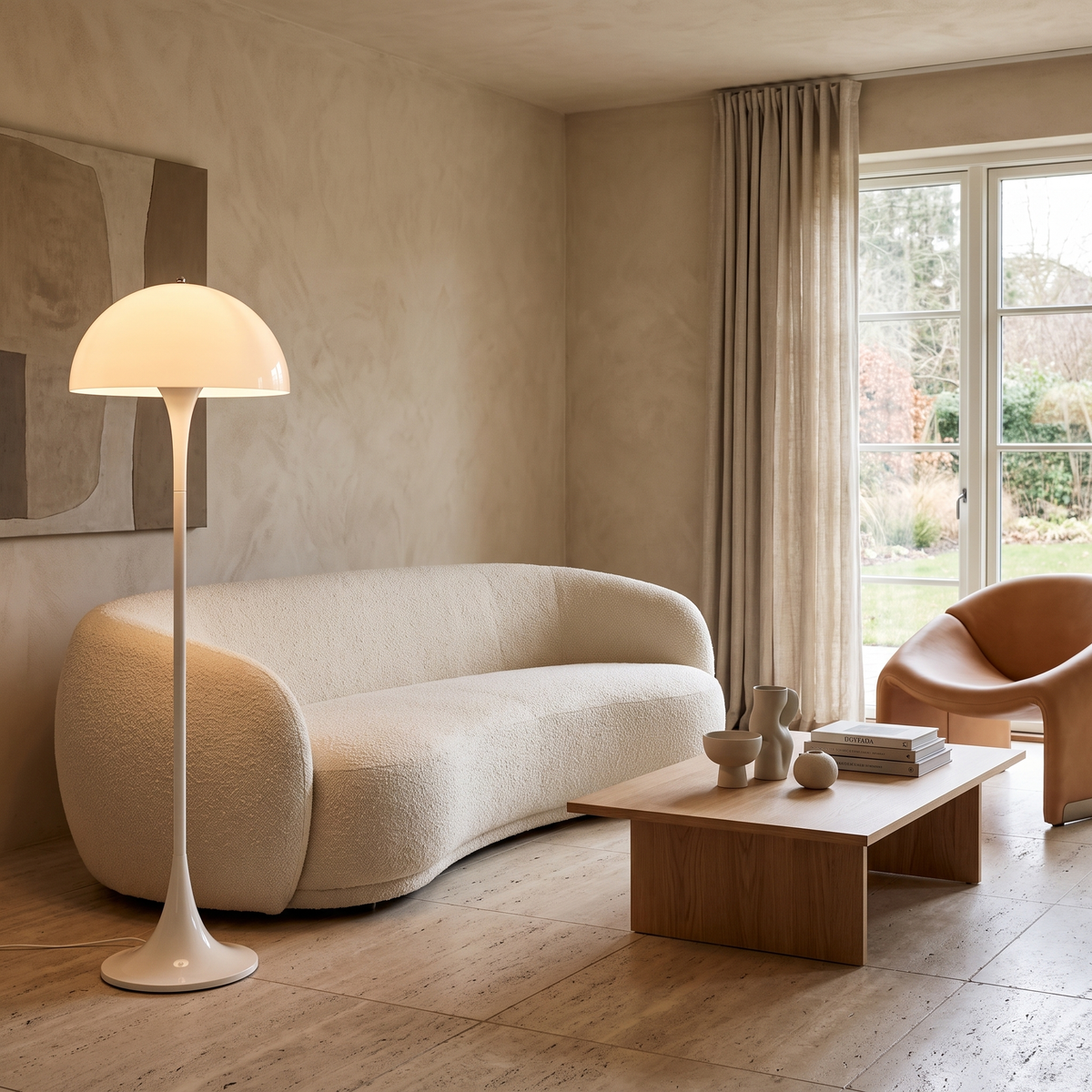
Plan living room lighting around reading, conversation and quiet evenings. Combine general, task and accent light where each has a purpose, rather than choosing a fixed number of lamps.
Start with the seat or activity that needs light, add a useful source at that position, then balance the rest of the room at different heights.

Map the places you use
Start with the sofa, a favourite chair, the console and the paths through the room. Note which places already receive useful light and which feel disconnected after dark. This helps you choose where another fixture would add value rather than simply filling an empty corner.
Think about the room at the times you use it most. Daylight can disguise an awkward evening layout. A fixture that looks balanced in the afternoon may be directly in your line of sight when you sit down at night.
Layer ambient, task and accent lighting
Ambient or general light helps make the room usable as a whole. Depending on the room, that may come from overhead fixtures or several other sources.
Task light serves a specific activity, such as reading. Position and control matter: a decorative shade alone does not establish whether a lamp gives the light you need at the chair.
Accent light brings attention to a wall, object or architectural feature. It is optional; the room does not need an extra fixture just to complete a formula.
Compare light at different heights
A ceiling fixture, a wall light and a table lamp occupy different parts of the room. Combining heights can make the arrangement feel more connected, but leave each piece enough space. A console lamp should still allow the console to work as a surface, and a floor lamp's base should fit without crowding a route.
Eloise offers a decorative glass table-lamp form for a console or side table. Orla brings a broad dome on a slim stem beside seating. Compare each one's actual height and footprint with the furniture rather than expecting a photograph to show the scale of your room.


Let materials relate without matching everything
You can repeat a material, finish or shape without buying fixtures that all look alike. A wood detail can connect with furniture; a rounded glass shade can echo other curves. Choose one or two relationships that matter to you and allow the other pieces to remain simple.
For example, Sferanne combines walnut with frosted glass globes. Orbivel pairs a wood base with a white globe on the wall. Their shared materials offer a starting point for comparison, not a requirement to use both in the same room.

Check glare, reflections and controls
Look toward the proposed light from the places where you sit. Consider whether the source could appear in a television or mirror, and whether the shade obscures another part of the room. Check that the controls will be convenient and that any plug-in cord has a sensible route.
If dimming is important, verify that the selected fixture and light source support it. Different options within one listing can have different controls. Do not assume that a warm light is dimmable or that every bulb works with every dimmer.
Build your lighting plan in a useful order
- Identify the activity or area that most needs attention.
- Measure the available surface, wall or floor space.
- Choose the light's position and check its power arrangement.
- Compare materials and shape with the existing room.
- Add another source only where it serves a clear purpose.
Browse living room lighting or use the lighting guide to compare wall, table, floor and ceiling fixtures.
Questions worth asking
Do I need ambient, task and accent lighting in every living room?
These are purposes, not a shopping list. General light makes the room usable; task light serves an activity; accent light draws attention to something. Add only the sources that your room needs.
Where should a floor lamp go?
Start beside the activity it will serve, such as a reading chair. Check the footprint, shade position, switch access and cord route from the seated position before deciding.
Should all my living room lights match?
They can share a material, finish or curve without being identical. Compare them as a group, allowing one or two pieces to be more expressive while others remain simple.
Product examples use Comvilo’s listed details and existing product photography. Check the selected configuration and current specifications before ordering. Follow the supplied installation instructions.
