
How to Choose and Position Wall Lights
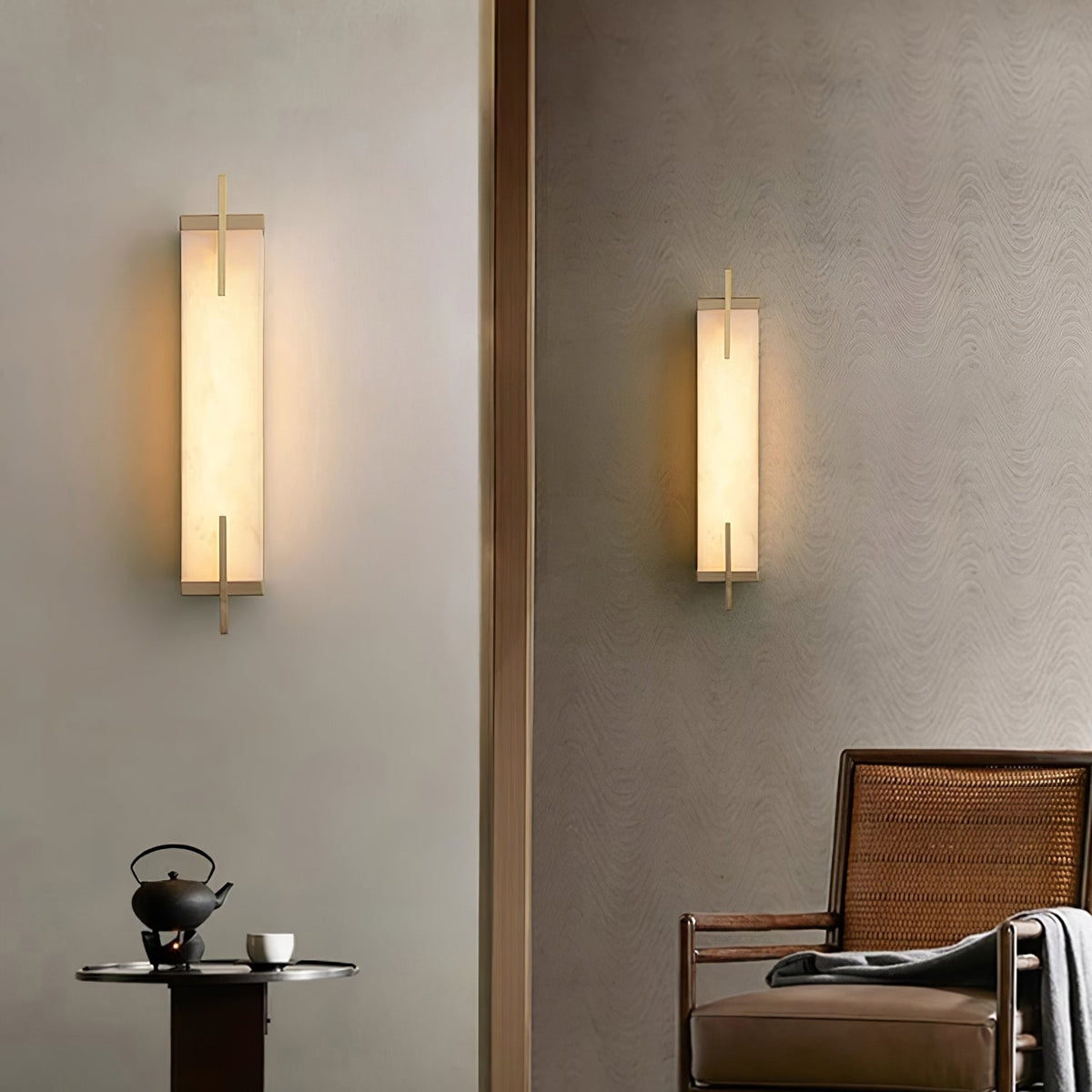
Choose wall lights and sconces by purpose, scale and connection type. Measure the full outline and projection, then compare the fixture with the bed, console or route beside it.
Decide what the light should do, mark its full dimensions on the wall, and check mounting, power and controls before choosing its final position.

Decide what the wall light should do
Beside a bed, the practical questions include reach, reading position and switch access. Near a console, a sconce can frame the surface or form a single focal point. Along a hallway, the fixture also needs to sit comfortably beside the route people use.
Those are different jobs. A decorative glow is not automatically a reading light, and a compact front view does not tell you how far the fixture projects from the wall. Use the listed dimensions and light-source details to compare the options.
Measure height, width and projection
Mark the proposed height and width with paper before choosing the fixture. Include its depth or projection in your planning, especially near door openings, shelving and narrow routes. View the outline from both the entrance and the position where you will usually sit or stand.
Serrane illustrates a tall, narrow approach: its listed heights are 23.6 and 31.5 inches. Orbivel is more compact, listed at 5.3 inches across and high. The two forms create different relationships with a bed, console or open wall.
Compare materials when lit and unlit
Stone, glass and fabric each give a fixture a different presence. Look at the outline and construction in daylight as well as the illuminated photograph. Natural stone patterns vary, so a gallery image of veining is an example of the material rather than a promise of an identical pattern.
Serrane pairs alabaster with metal brackets. Bellemont uses a glass shade, curved arm and ornate backplate. Compare the actual finish options on each listing instead of assuming the first photograph represents every available version.


Choose a single sconce or a pair
A pair can frame a bed, mirror or console, while a single fixture can give a smaller area its own focus. Plan the composition around the furniture rather than placing two lights simply because a product photograph shows them together.
Read the quantity carefully. A product's set-of-two option is different from its size or finish, and a bundle offer can introduce another quantity choice. Confirm the selected configuration and the total number of fixtures before ordering.
Plan plug-in and hardwired connections
A plug-in wall light needs a reachable outlet, a suitable cord route and proper wall mounting. A hardwired fixture needs an appropriate electrical installation. Follow the supplied instructions and use qualified installation help where required; this guide is for choosing and planning, not wiring.
Linocanne is listed with a 59-inch cord, inline switch and selectable plug options. Serrane and Orbivel are listed as hardwired. Check the selected product rather than inferring the connection from a room photograph.

Your wall-light placement checklist
- Check the fixture's full dimensions and mounting details.
- Consider the view from a bed or chair and any reflection in a mirror.
- Make sure the selected controls and power arrangement suit the location.
- Read the location rating; an indoor light is not automatically appropriate for a wet area.
- Confirm the finish, light source and number of fixtures in the order.
Explore wall lighting and plug-in wall lights, or compare all four fixture types in How to Choose the Right Light.
Questions worth asking
How high should I place a wall light?
Choose a position that suits the fixture, the task and the furniture. Check the view and switch access from the bed or chair, then follow the product’s mounting and installation instructions. One universal height is not suitable for every sconce.
Should I choose one wall light or two?
A pair can frame furniture; one fixture can define a smaller area. Plan the wall as a whole and check whether the selected product option or offer contains one fixture or several.
Are all wall sconces hardwired?
No. Some are hardwired and others plug into an outlet. Linocanne is a plug-in example; the listed Serrane and Orbivel products are hardwired. Confirm the selected listing before planning installation.
Product examples use Comvilo’s listed details and existing product photography. Check the selected configuration and current specifications before ordering. Follow the supplied installation instructions.
